




Roundtable at the Museum
This summary was written by Andrew Lazar, the Museum's curator and organizer of this fascinating program:
On Saturday September 12th, the Museum had a unique event with the participations of some of Cleveland's other ethnic leaders who gathered to discuss the immigrant contributions on the occasion of the 250th anniversary of the United States of America.
The Roundtable panel discussion was moderated by John Grabowski (Associate Professor at CWRU and Historian at the WRHS), with panelists Margaret Lynch (Director of the Irish-American Archives), Pamela Dorazio Dean (Director of the Italian American Museum of Cleveland), Andrew Fedynsky (of the Ukrainian Archives and Museum), and Andrew Lazar (Curator and Exhibits Director of the Cleveland Hungarian Museum).
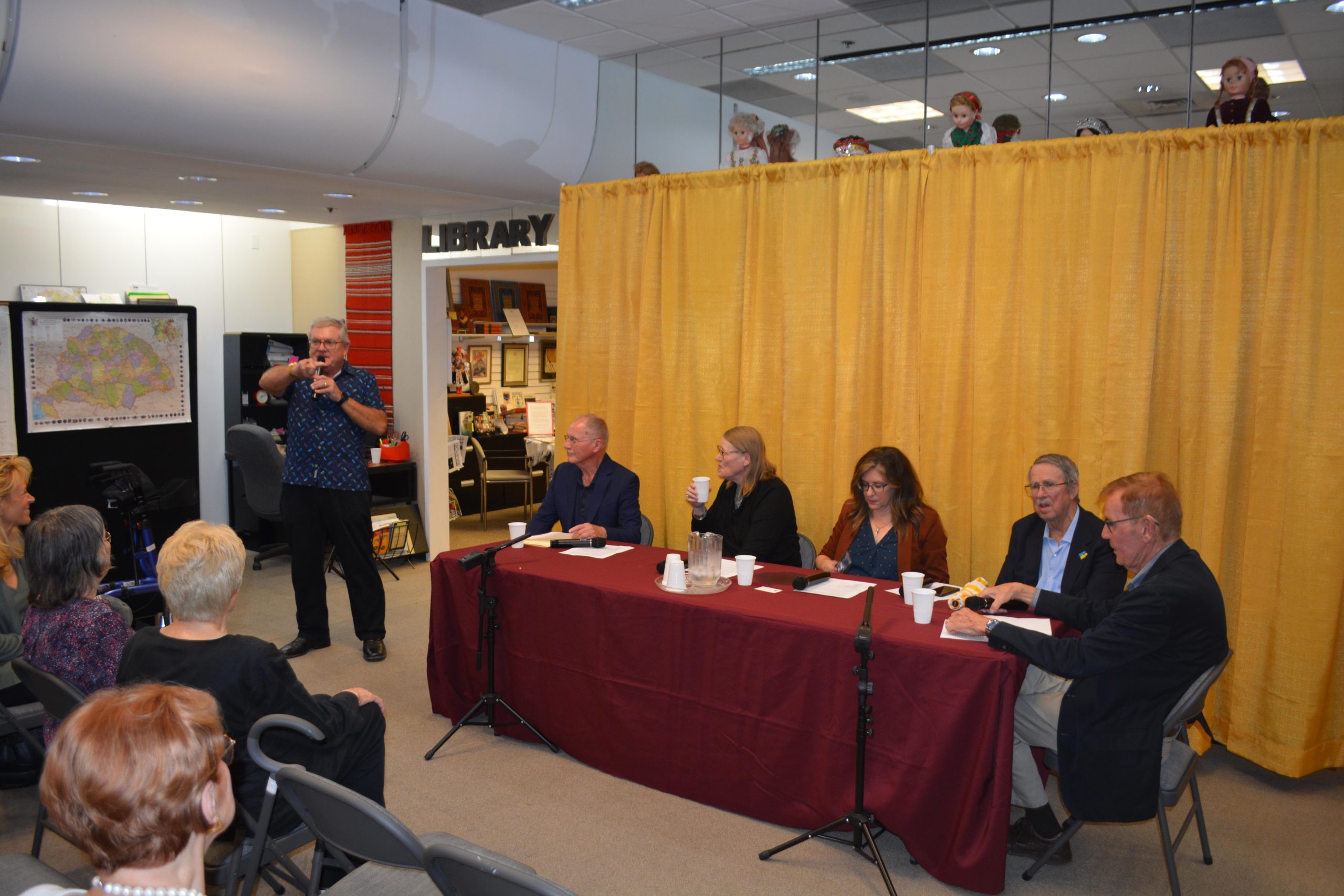
The discussion started with the Revolutionary War 1776 to 1783: the signing of the Declaration of Independence by eight Irish immigrants from the various Colonies to the heroic military contributions by the Polish, Kosciuszko and Pulaski along with the Hungarian Michael Kovats who died at the Battle of Charleston SC in 1779. Then the discussion moved to the effect of the Revolutionary War on other later revolutions in Poland and especially the French Revolution of 1789, to the later revolutions in Europe in 1848 and with the Hungarian Revolution of 1848 - 1849.
They discussed the Civil War and the immigrant groups who participated in the various ethnic military regiments such as the Irish from the Northern states, the German regiments from New York, the Italian Garibaldi units who fought on the Union side, to the many Hungarian Union officers who immigrated to America after the failed Hungarian Revolution of 1848-49.
SPECIAL EXHIBIT: “250th Anniversary of the United States and the Hungarian-American Contributions”.
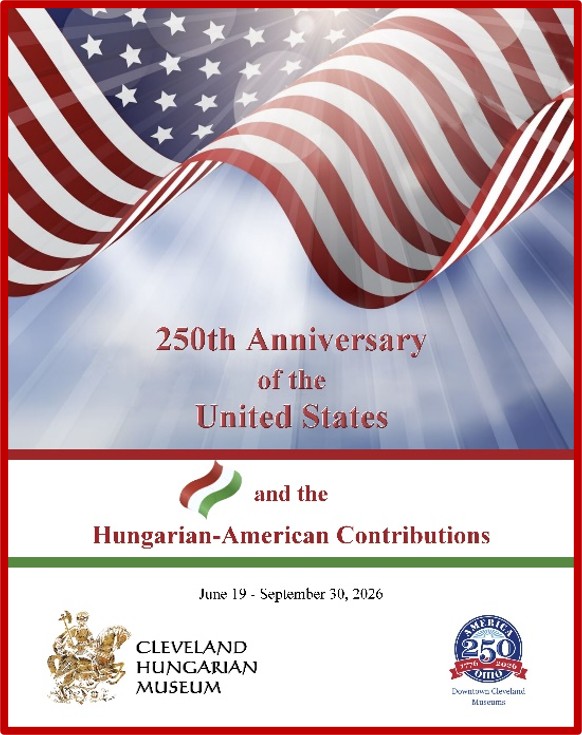 The exhibit celebrates the Hungarian immigrants and their descendants in the development of, and contributions to, various fields of endeavor including Science, Mathematics, Business, the Military, Architecture, Literature, Cinematography, Film, Art, Photography, Entertainment, and Sports.
Of direct relevance to this anniversary is the founding and training of recruits for the US cavalry during the Revolutionary War by Colonel Michael Kovats and his heroic engagement at the Battle of Charleston, SC on May 11, 1779, where he lost his life.
The exhibit recounts the dedication and service of many Hungarian officers who took part in the Hungarian War for Independence of 1848 - 1849, who then came to the United States and formed an experienced military officer contingent to the Union in the Civil War.
There are 148 names on the Legacy Wall who made noteworthy contributions in those various fields noted above. They range from being awarded the Medal of Honor for their service to this country to winning the Nobel Prize in Science, Economics and Medicine; from winning the Academy Award for their role in Acting, Cinematography, Directing or Music to receiving the Pulitzer Prize in Literature.
The Pulitzer Prize was established in 1917 by American publishing tycoon Joseph Pulitzer who immigrated from Mako, Hungary. With money he bequeathed to Columbia University, the prestigious annual monetary award continues to recognize achievements in American journalism, photography, literature, history, poetry, music and drama.
Every individual in the Exhibit is exemplary and deserving of recognition for the determination and dedication with which they achieved their contribution to their field; collectively, these Hungarian-Americans have enriched the culture and elevated the stature of the United States of America over its 250th year history.
The Exhibit is supplemented and enhanced by interactive video experiences featuring many of the individuals and their accomplishments, explanations and examples of the science and math or business and artistic successes for which they are known. There are also videos of their personal background and history as Hungarian immigrants or as their descendants which add to our understanding and appreciation of their contributions and their Hungarian-American experience.
Read more...
 In February, 2020, the Museum received a grant from the Ohio History Connection, which allowed us to purchase software that will enhance our ability to catalog our collection, and incorporate donor and support information into one database. As a recipient organization, we are please to announce that this project is made possible in part by the Ohio History Fund, a grant program of the Ohio History Connection. The Ohio History Fund is made possible by voluntary donations of state income tax refunds, sales of Ohio History “mastodon” license plates, and other donations.
