
This summary was written by Andrew Lazar, the Museum’s curator and organizer of this fascinating program:
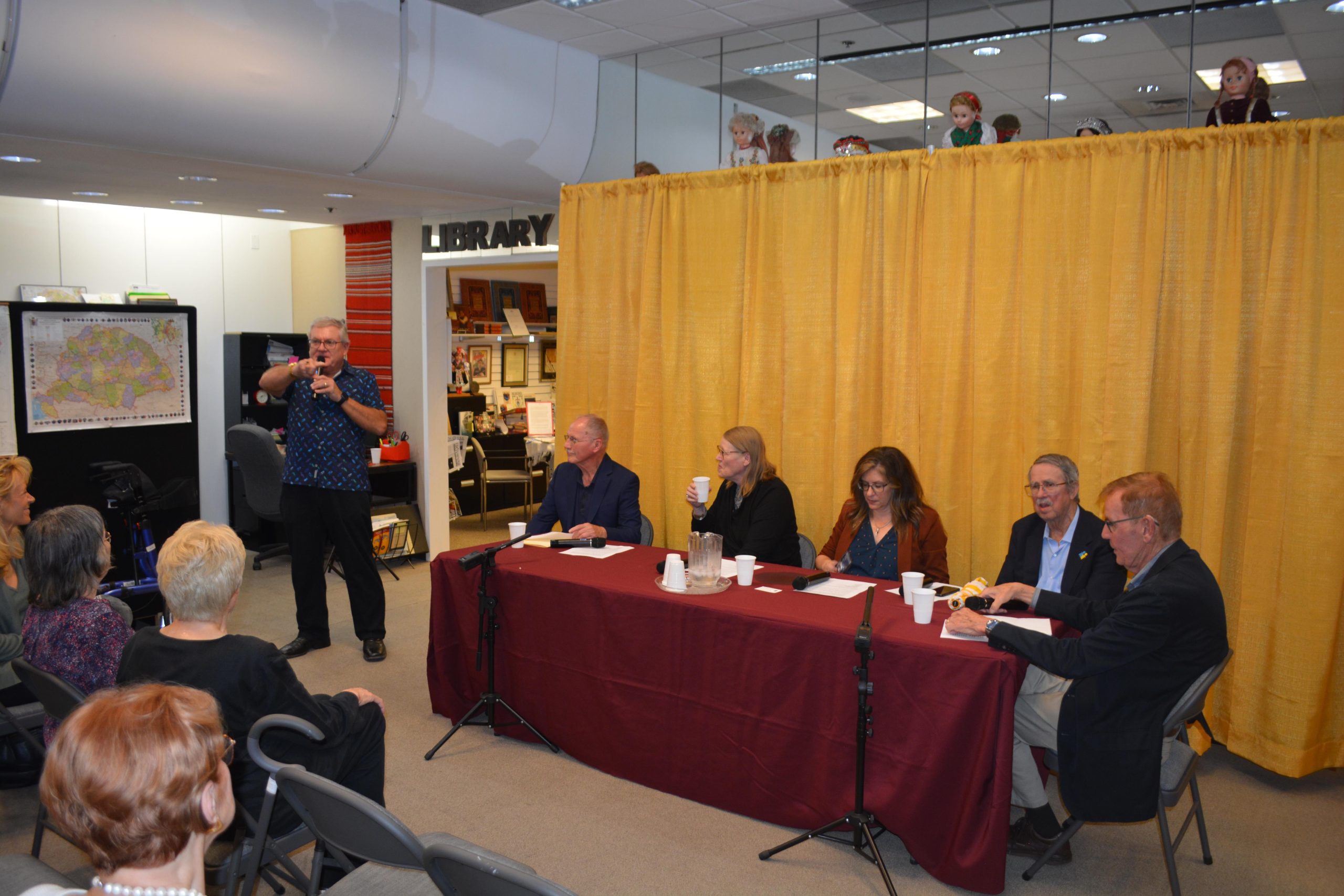
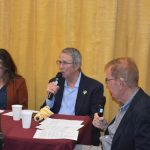
On Saturday September 12th, the Museum had a unique event with the participations of some of Cleveland’s other ethnic leaders who gathered to discuss the immigrant contributions on the occasion of the 250th anniversary of the United States of America.
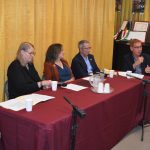
The Roundtable panel discussion was moderated by John Grabowski (Associate Professor at CWRU and Historian at the WRHS), with panelists Margaret Lynch (Director of the Irish-American Archives), Pamela Dorazio Dean (Director of the Italian American Museum of Cleveland), Andrew Fedynsky (of the Ukrainian Archives and Museum), and Andrew Lazar (Curator and Exhibits Director of the Cleveland Hungarian Museum).
The discussion started with the Revolutionary War 1776 to 1783: the signing of the Declaration of Independence by eight Irish immigrants from the various Colonies to the heroic military contributions by the Polish, Kosciuszko and Pulaski along with the Hungarian Michael Kovats who died at the Battle of Charleston SC in 1779. Then the discussion moved to the effect of the Revolutionary War on other later revolutions in Poland and especially the French Revolution of 1789, to the later revolutions in Europe in 1848 and with the Hungarian Revolution of 1848 – 1849.
They discussed the Civil War and the immigrant groups who participated in the various ethnic military regiments such as the Irish from the Northern states, the German regiments from New York, the Italian Garibaldi units who fought on the Union side, to the many Hungarian Union officers who immigrated to America after the failed Hungarian Revolution of 1848-49.
The panel also touched upon the immigrant labor forces who fueled the building of the Transcontinental Railway by Irish, the Chinese immigrant labor force and the Industrial Age along with the immigrant labor force recruited from Eastern Europe by the many mining and manufacturing factory companies prompted by the need for more labor than available at the time in the US.
The Panel covered: The effect of the two world wars, from the recruiting of immigrant conscripts to the development of technology in the support of the war effort, to the large scale displacement of populations from war ravaged countries in Central and Eastern Europe. The technological and scientific impact, especially with the start of the Manhattan Project which developed the atomic bomb and the major contributions made by immigrant scientists such as Enrico Fermi and Emilio Segre from Italy, Stanislaw Ulam and Emil Konopinski from Poland, George Kistiakowsky from the Ukraine, and the Hungarians Leo Szilard, Eugen Wigner and Edward Teller, who at its onset composed a letter for Albert Einstein to sign and give to President Roosevelt urging the development of the atomic bomb.
The panel discussed immigrant talent in cultural areas such as classical music with the Italian conductors Arturo Toscanini of the New York Philharmonic and the NBC Symphony Orchestra; the Hungarian conductors George Szell of the Cleveland Orchestra, Eugene Ormandy of the Philadelphia Orchestra, Sir Georg Solti of the Chicago Orchestra; the Polish conductors Artur Rodziński of the Cleveland Orchestra and Leopold Stokowski who had a long tenure with the Philadelphia Orchestra; as well as other German conductors. And touched upon the Motion Picture industry which was mainly founded by immigrants like the Hungarian, Adolph Zukor – Paramount, and William Fox – Fox Studios; the Polish, Warner brothers – Warner Studios; the German, Carl Laemmle – Universal Studios and others.
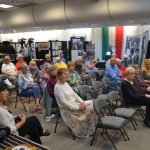
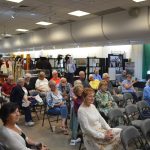
The discussion was then opened for questions from the audience.
No comments yet.